
Traditional Sarees


Tritiya


Ashtami


Pratipada


Dashami


Ashtami




Navami


Panchami


Ashtami


Dashami


Tritiya


Saptami


Heritage weaves
Weaves with a long memory
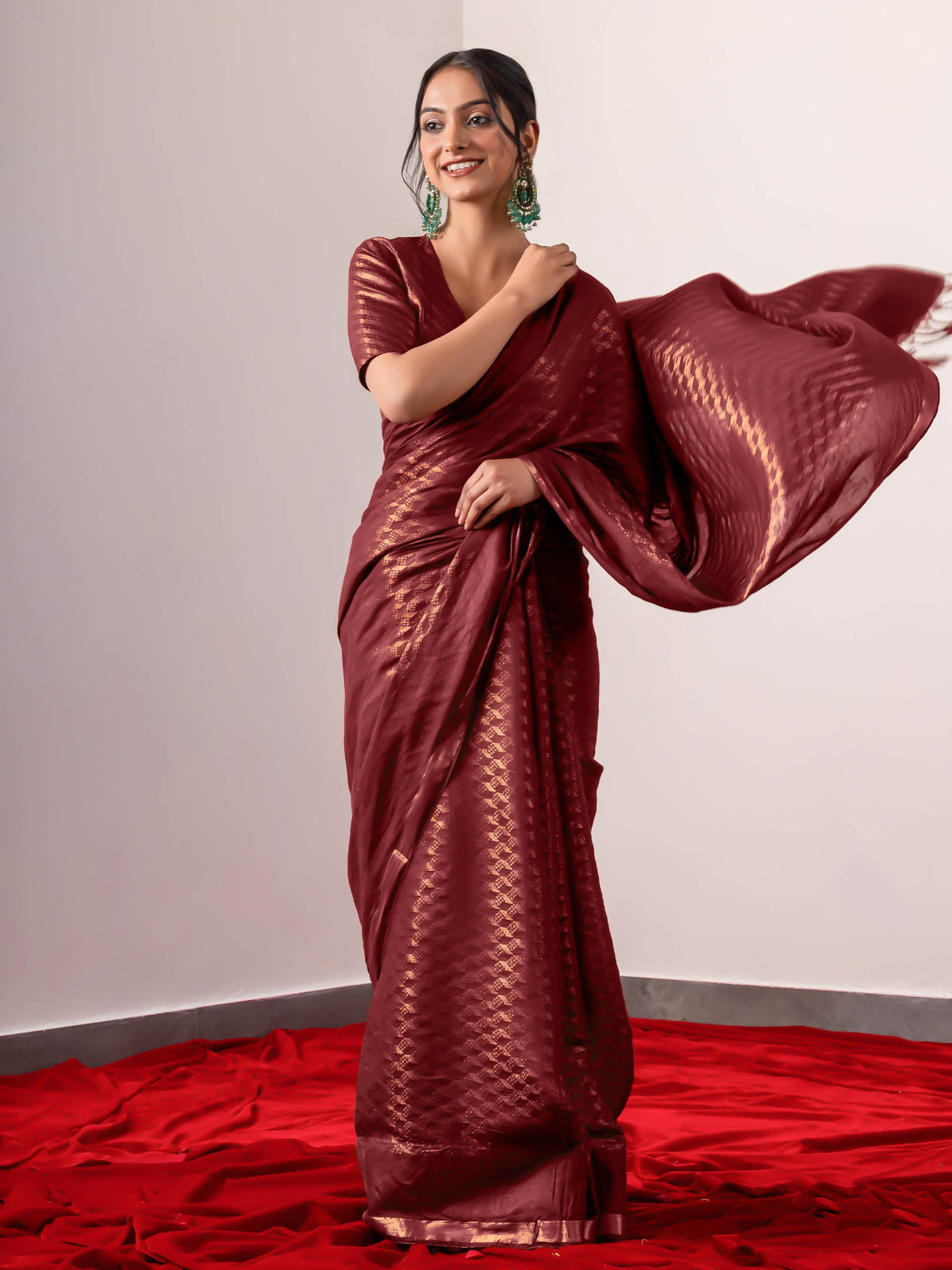
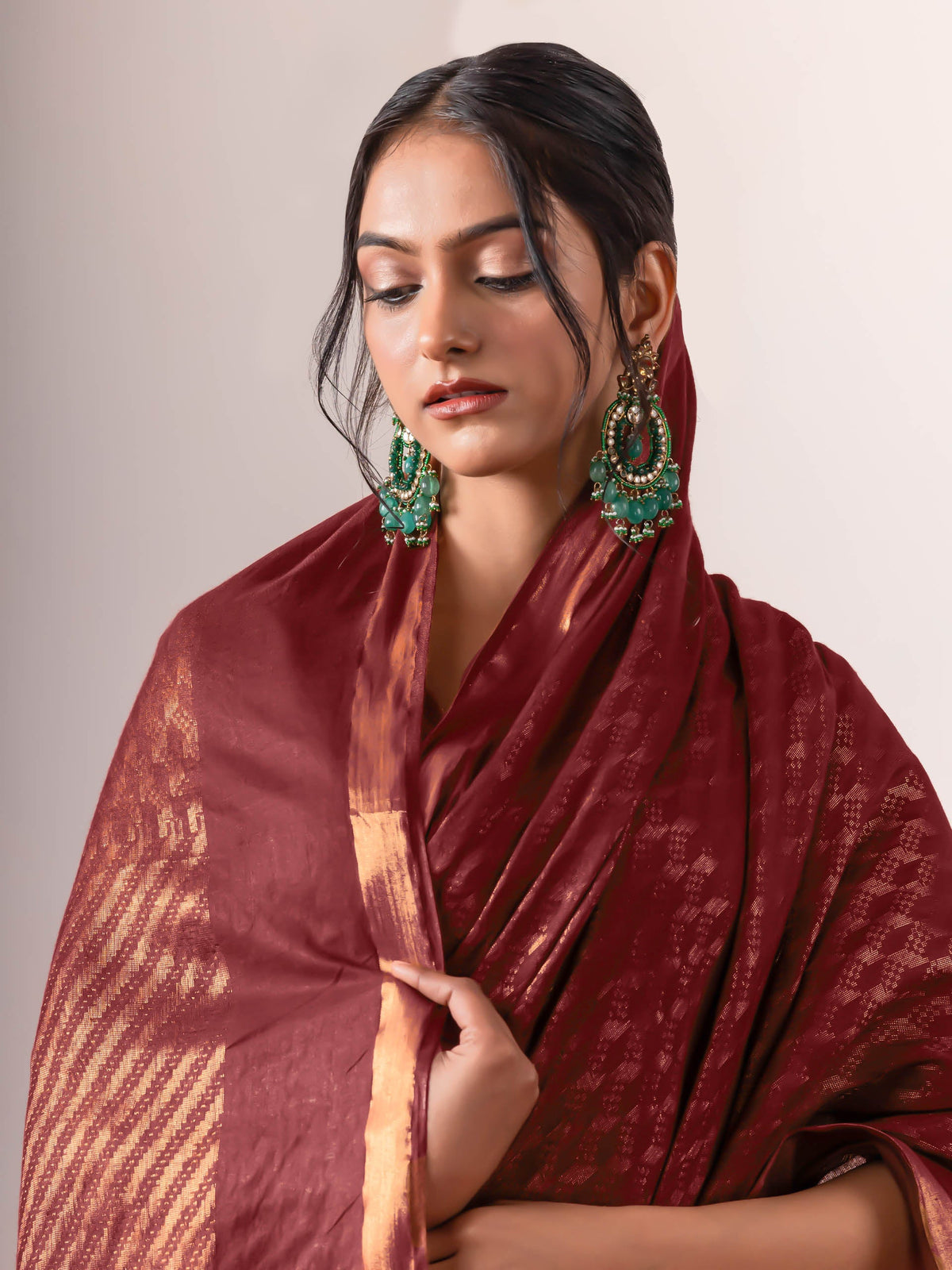
Every region of India has its own saree language. This page gathers some of the best known: the silks, cottons and zari weaves you reach for when an occasion calls for something rooted.
Banarasi leads, with a fuchsia red jaal silk, a plum temple pure silk and an emerald temple silk. Jamdani cotton comes in neelkanth bronze and rosemati red. The Bhagalpur silk blends in soft grey and dark coffee are quieter, and we love them for it.
We often suggest building a small festive capsule from here. One Banarasi for the big days, one Jamdani for festive lunches and one silk blend for everything in between. That covers the whole season without a single repeat.
Style them the traditional way: a contrast silk or brocade blouse, jhumkas, a gajra and a low bun that shows off the pallu. For more silk, see our Banarasi sarees. For mornings at home, our pooja sarees are lighter and easier.
Good to know
What is a Banarasi saree?
It's a saree woven in Varanasi, known for its silk, zari and patterns like jaal and temple borders.
Which traditional saree is best for summer?
Jamdani cotton, cotton chanderi or a Bhagalpur silk blend. They're lighter and more breathable than heavy silk.
How should I store a silk saree?
Wrap it in muslin, refold it every few months so creases don't set, and keep it away from damp.