
Shubho 108





A small edit
Named for an auspicious number
Shubho 108 takes its name from the sacred number counted on mala beads and heard in mantras. It's a short, focused edit for the many small poojas in the year: Lakshmi puja, Saraswati puja, a housewarming, a quiet Thursday at the temple. Where our main pooja sarees page is broad, this one is a shortlist.
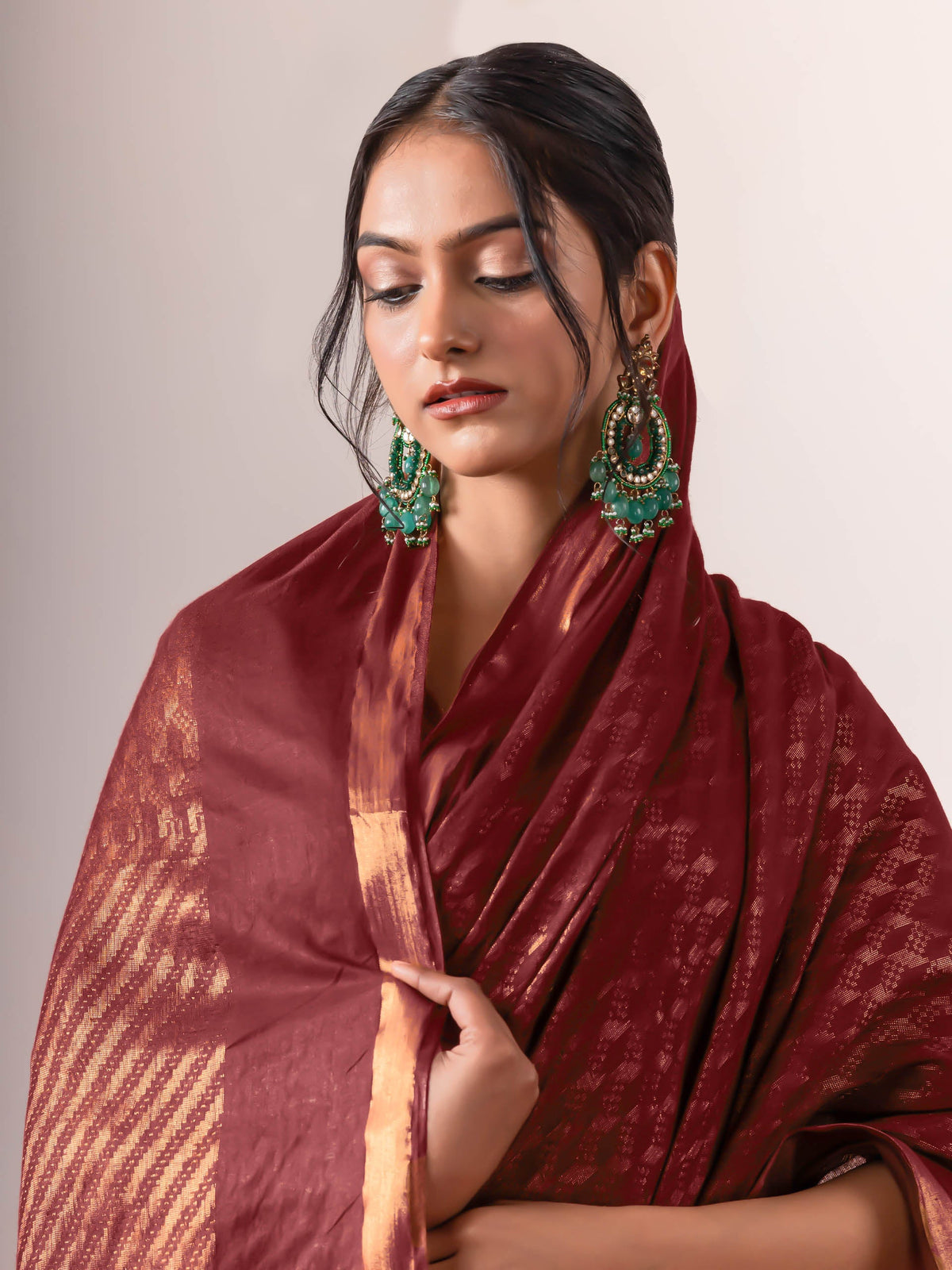
Everything here is weave-first. Our pure Neelkanth Jamdani cotton carries bronze zari, and the Golden Gate cotton silk pairs gold with a purple border. Bhagalpur silk blends come in dark coffee with bronze and in a soft grey. A red-and-beige organza with a golden border adds a little more ceremony.
Sarees like these need very little styling. A plain contrast blouse, a gajra and gold jhumkas are usually enough, and zari borders glow beautifully under diya light. Most come with blouse fabric, or you can pick one of our pooja blouses. Pieces here are limited, so choose early and leave time for stitching.
Good to know
Why is it called Shubho 108?
108 is considered auspicious in Hindu tradition, in mala beads and in chants. We named the edit for sarees meant for auspicious days.
What should I wear for a griha pravesh?
A gold-bordered cotton silk or Jamdani feels festive yet practical for a long day of rituals and guests.
Can I hand wash a Jamdani?
Dry clean anything with a zari border. Plain cotton can be hand washed in cold water with a mild detergent and dried in the shade.