
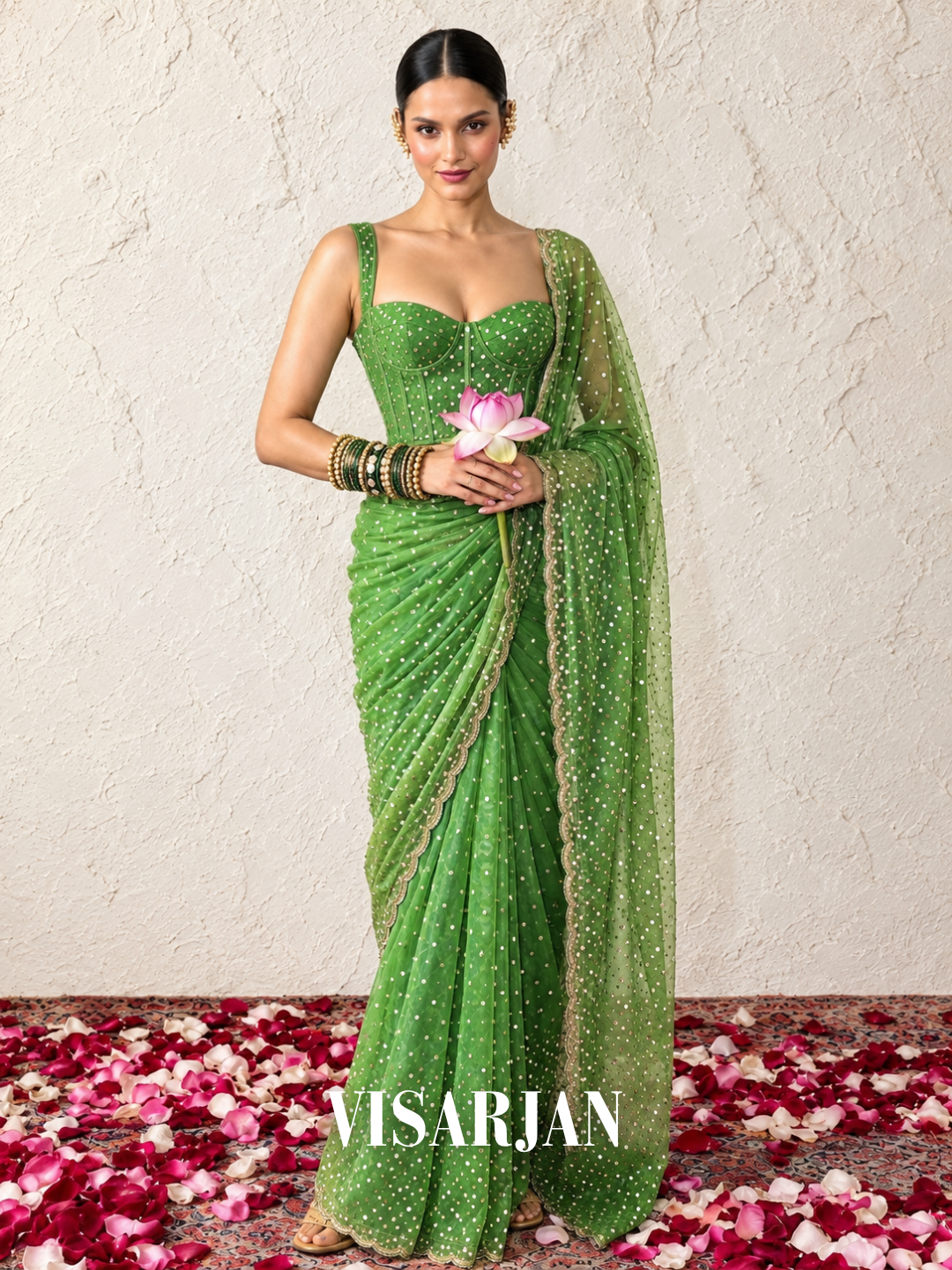
Ganesh Visarjan 2026: What to Wear on Anant Chaturdashi
The house has smelled of modak and camphor for ten days. The aarti has been sung twice a day until everyone knows their part. And now comes the morning nobody quite wants — the one where you carry Bappa to the water and say the words back to him: Ganpati Bappa Morya, pudhchya varshi lavkar ya. If you are still deciding what to wear for that day, here is a straight answer — what works for the last aarti, what survives the procession, and what still photographs beautifully at the end of it.
When is Ganesh Visarjan 2026?
The final visarjan falls on Anant Chaturdashi, Friday 25 September 2026 — the tenth day of Ganesh Chaturthi, which began on Monday 14 September. Not every household keeps Bappa for the full ten days, so the earlier visarjan dates this year were:
- Day 1.5 — Tuesday, 15 September 2026
- Day 3 — Wednesday, 16 September 2026
- Day 5 — Friday, 18 September 2026
- Day 7 — Sunday, 20 September 2026
- Day 10, Anant Chaturdashi — Friday, 25 September 2026
If yours is a ten-day household, Friday is your big one — and it is a working day, so most families do the morning puja early and the procession in the afternoon.
What Visarjan Day Actually Asks of Your Outfit
This is not a sit-down evening. Visarjan means standing through a long aarti, carrying things, walking in a crowd, dhol that makes everyone dance whether they planned to or not, gulal in the air, and water at the end of it. September in most of India is still humid.
So the brief is specific: something light enough to move in, in a fabric that dries and recovers, in a colour that reads well in bright afternoon sun and in the flat light of a phone camera. Heavy tissue and stiff silk will fight you all day. Chiffon, georgette and soft satin will not.
Three Looks for the Three Parts of the Day
1. The morning aarti — white, ivory or the palest pastel
The last puja at home deserves something quiet. White is traditional, photographs beautifully against marigold and red cloth, and sits well next to everyone else's brighter clothes without competing. A white chiffon saree with hand gota patti is the version of white that does not read as plain — the gota catches the diya light, and the chiffon stays cool through a long aarti. Pair it with a gold blouse rather than a white one.
2. The procession — wear something you can actually move in
This is the part people underestimate. If you are walking with the dhol, a pre-draped saree is the single most practical thing in your wardrobe — it goes on in under a minute, it does not come undone in a crowd, and you are not re-pinning pleats in someone's living room halfway through the day. If you prefer a classic drape, keep it to soft chiffon and pin the pallu properly at the shoulder.
3. After the visarjan — deep colour, softer mood
The walk back is a strange, tender hour. Something in a deeper tone suits it — a crimson butter chiffon or a rich satin drape carries the evening prasad and the family photographs without looking like you changed for a party.
The Colours Bappa Wears Best
Red and saffron sit closest to Ganpati — red is the colour of his worship, and yellow and saffron carry the same auspiciousness in a lighter register. Green is the third one people forget: it belongs to the durva grass offered to him, and mehndi green is quietly flattering on almost everyone.
A bright yellow gota patti chiffon is the most under-used visarjan colour there is — it glows in afternoon sun in a way red simply cannot.
What to skip: black, and anything so pale it disappears against a white kurta crowd.
The Small Things That Decide the Photographs
- Blouse — a contrast blouse does more for a simple drape than any amount of embroidery. Gold, deep maroon or bottle green against a light saree. Festive blouses here.
- Footwear — flat juttis or kolhapuris. You will walk further than you think, and there may be steps down to the water.
- Jewellery — one strong piece. Jhumkas or a temple-style neckpiece, not both.
- Hair — tied up, with a gajra if you have one. Open hair and dhol do not cooperate.
- Pins — carry four more than you need. Someone in your group will need them.
- Bag — small, crossbody, hands free for the aarti thali.
The Season Doesn't End Here
Visarjan is the opening act. Navratri, Durga Puja and Karva Chauth follow within weeks, and the same practical logic applies — light fabrics, strong colour, blouses that work across more than one saree. Our festive edit, Dasham 26, and the Durga Puja edit are both built for exactly these weeks.
Ganesh Visarjan 2026: Quick FAQ
What colour should I wear for Ganesh Visarjan?
Red, saffron, yellow or green are traditional. White works beautifully for the morning aarti. Avoid black.
Can I wear a saree to the visarjan procession?
Yes — choose chiffon, georgette or soft satin, pin the pallu at the shoulder, and wear flats. A pre-draped saree is the easiest option if you are walking with the procession.
Is it alright to repeat the saree I wore on Ganesh Chaturthi?
Completely. Change the blouse and the jewellery and it reads as a new look.
What should I wear if I am hosting the visarjan at home?
Something you can cook and move in — a light chiffon saree or a simple suit, with the heavier jewellery saved for the aarti itself.
Browse the full Swtantra saree collection — hand gota patti, hand-dyed ombre and pure silk chiffon, made in Delhi and shipped worldwide.